GLOBHAUS R&D · 8 min read · 2026-10-10
The window frame material debate usually stops at “PVC or aluminium?”. GLOBHAUS’s multi-chamber uPVC (UPVC) system profile is the right default for most export projects — here is why, in plain terms.
What uPVC (UPVC) actually is
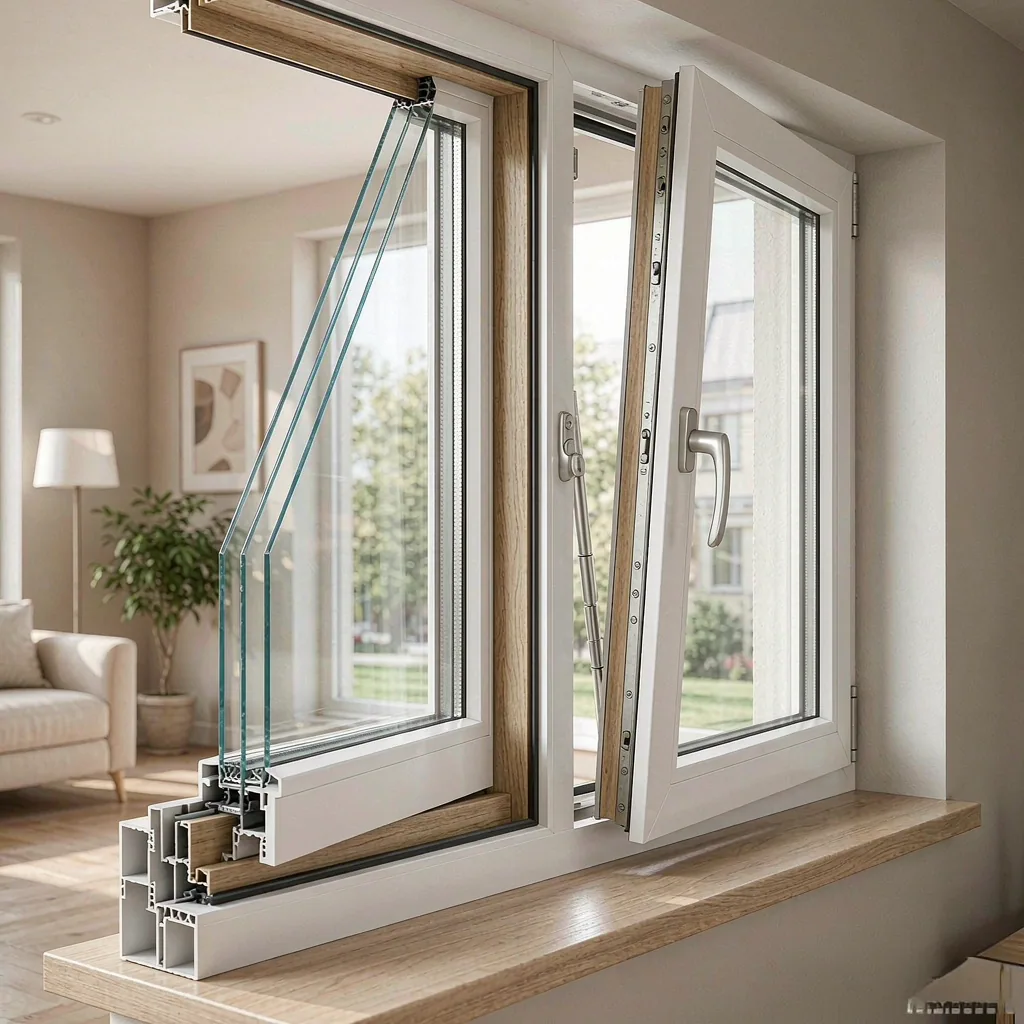
It is a multi-chamber PVC-U profile with integrated steel reinforcement inside the chamber walls, then finished with a wood-grain interior film and a weather-stable white (or coloured) exterior. The steel gives rigidity; the uPVC gives insulation and a warm touch.
vs pure PVC-U
Standard PVC-U frames can be flexible over large spans and can creep under heat. The internal steel stiffens the profile so we can build bigger, quieter units without thickening the frame. Dimensional stability also keeps seals tight for longer.
vs aluminium
Aluminium is strong and slim, but it is a thermal bridge: without an expensive polyamide break, it sweats and leaks heat. Steel-reinforced uPVC matches most of aluminium’s rigidity while staying warm, and costs roughly 40% less.
| Property | uPVC (steel-reinforced) | Aluminium | Pure PVC-U |
|---|
| Thermal (Uf) | Low | High (unless broken) | Low |
| Rigidity | High | Very high | Medium |
| Relative cost | 1.0× | ~1.6× | ~0.9× |
| Formaldehyde | None | None | None |
Where it wins
- Cold climates needing low U-values without aluminium pricing.
- Projects wanting a warm wood-grain interior without real timber maintenance.
- Large fixed and tilt-turn units where pure PVC would sag.
Steel-reinforced uPVC is not a compromise. For 80% of residential and light-commercial exports, it is the optimum point on the cost-performance curve.
The honest limits
For ultra-slim curtain walls or spans beyond uPVC limits, aluminium still leads. We offer aluminium-clad uPVC systems exactly for those edge cases.
Request a Quote More insights
Where each material fits
uPVC (documented as vinyl windows in North American tenders) wins on thermal comfort and first cost for most residential and light-commercial openings, while aluminium wins on span, slim sightlines and curtain-wall scale. The honest way to choose is by aperture: small to medium windows and doors almost always favour uPVC on lifetime cost; very large lights, shopfronts and structural glazing favour aluminium. Hybrid aluminium-clad uPVC captures most of both — the warm multi-chamber core inside, a slim metal skin outside — at a mid price. The right answer is rarely 'one material for everything'; it is a per-opening decision based on size, colour requirement and the energy target.
Thermal, cost and durability trade-offs
A multi-chamber uPVC profile is intrinsically a better insulator than a metal frame of the same width, so matching the aluminium's U-value usually needs a thermal break and sometimes a wider frame. Aluminium's strength lets it hold larger panes with thinner frames, which clients value for views and for matching a building's metal language. Maintenance is similar in practice — both need occasional cleaning and gasket checks — but aluminium resists surface denting better while uPVC can discolour under sustained direct sun unless a UV-stable formulation is specified. Specific U-values, frame widths and finishes are confirmed per project against the quoted system and the local climate.
Specifying without bias
Write the specification around performance first: target U-value, acoustic rating, maximum pane size and colour, then let the factory propose the material that meets it at the right cost. Avoid locking the material early, because it pushes the quote in one direction before the performance need is clear. For mixed projects, allow uPVC on the standard openings and aluminium on the hero glazing — the building reads as one system when the colours and sightlines are coordinated. Request the comparison as two quoted options on the same performance baseline so the decision is financial, not tribal.
Quick takeaways for specifiers
The honest way to choose is by aperture and performance, not by loyalty to a material. Small to medium openings almost always favour uPVC on lifetime cost, while very large lights, shopfronts and structural glazing favour aluminium for its strength and slim sightlines. Aluminium-clad uPVC captures most of both benefits at a mid price when both warmth and a metal skin matter. Write the specification around the target U-value, acoustic rating, maximum pane size and colour first, then let the factory propose the material that meets it at the right cost. Requesting two quoted options on the same performance baseline turns the decision from tribal into financial, and usually reveals savings worth keeping. Where a façade mixes the two materials, set one colour and one sightline rule so the result reads as deliberate rather than as two systems bolted together by accident.
 GLOBHAUS